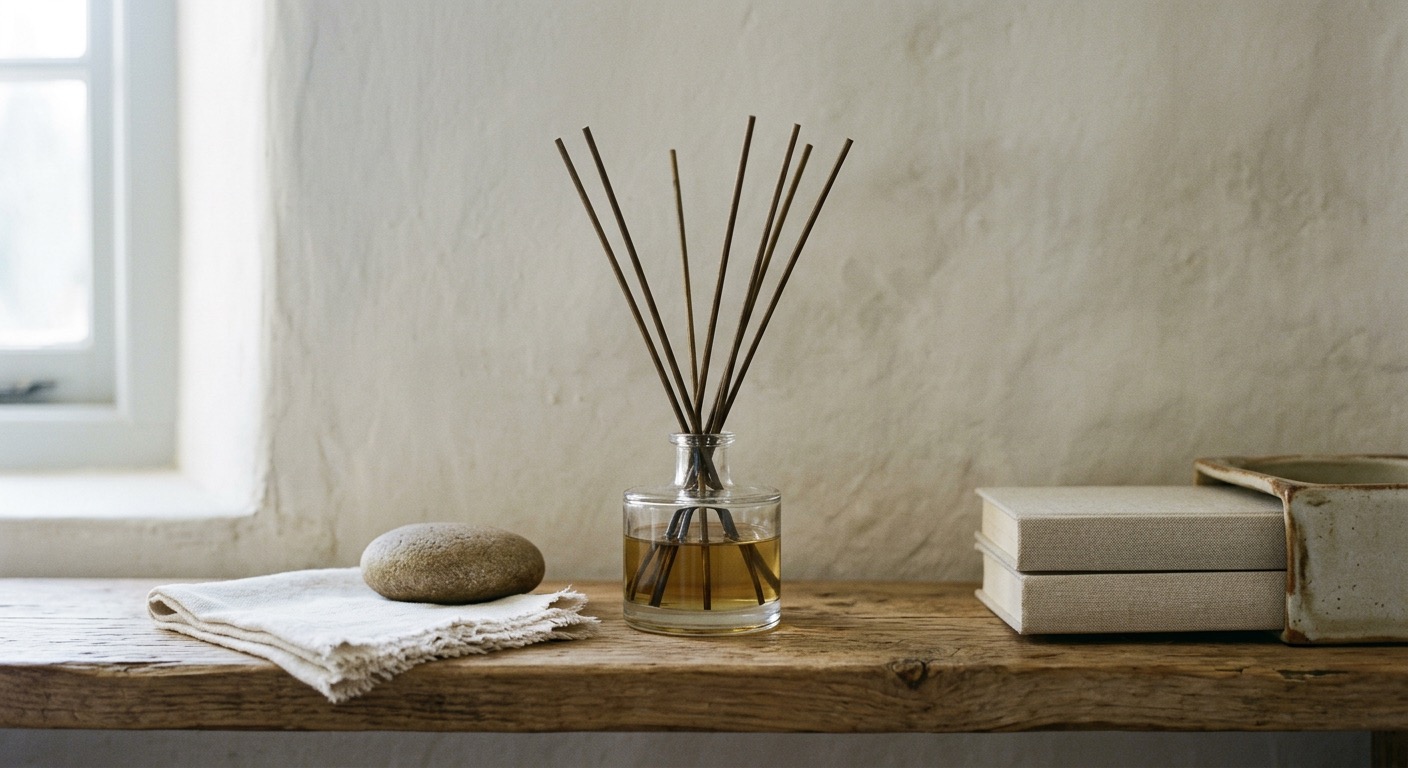
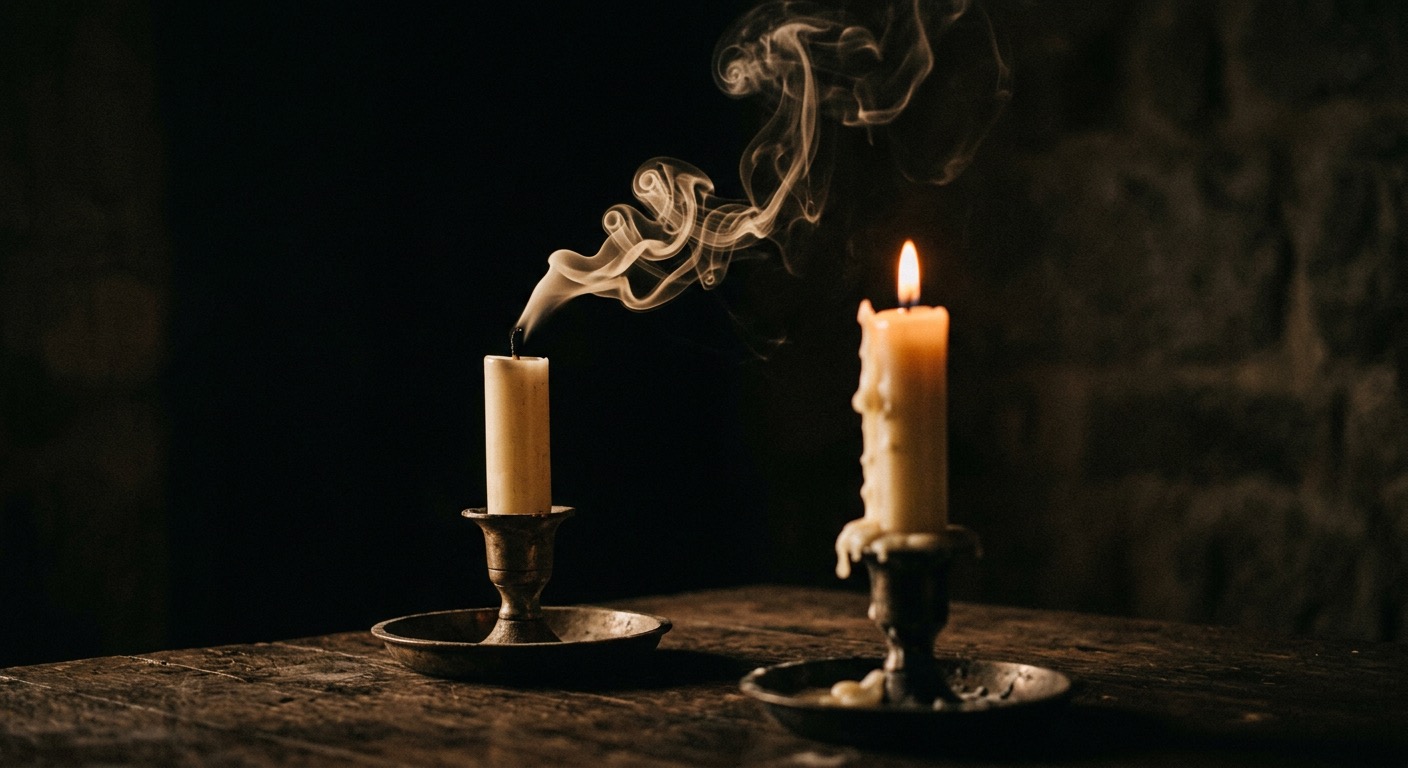
Incense has a reputation problem in the West. People associate it with headshops, with dorm rooms, with something that feels slightly old and slightly performative. This is because most people have only encountered bad incense: cheap sticks soaked in synthetic fragrance that smell like cleaning products trying to be exotic.
Japanese incense is a completely different thing. It is made from natural materials, compressed into thin sticks or small cones, and designed to burn quietly. The smoke is minimal. The fragrance is precise. It lasts twenty to thirty minutes and leaves a soft, calm residue in the air that a candle does not.
This is what incense does that candles cannot: it marks a moment. You light it before you sit down to read. Before you meditate. Before a conversation you want to be present for. The act of lighting it is a small ceremony. The smoke gives the room a character that dissipates naturally when the stick is done.
Why Japanese incense specifically
Japan has been producing incense for over a thousand years, and the craft reflects that depth. The best Japanese incense makers do not use synthetic fragrance compounds. They use natural materials: aloeswood (oud), sandalwood, clove, cinnamon, camphor, herbs. The compositions are layered and complex, not in a perfume-launch-press-release way, but in a this-smells-like-something-real way.
The stick burns completely, leaving almost no ash mess. The holder, a simple ceramic or wood piece with a small slot or bed of sand, holds the stick upright and collects ash as it burns. This is not a ritual that requires a lot of equipment. One box, one holder, a surface near a window.
Shoyeido
Shoyeido has been making incense in Kyoto since 1705. That is not marketing. It is a fact that explains why the quality is what it is: three hundred years of refinement is not a trend cycle.
Their Horin line is where to start. Tenpyo is sandalwood and spice, warm and grounded. Go-Un is clove-forward with a soft wood base that dissipates into something almost floral. These are not aggressive scents. They are background presences that make a room feel more intentional without requiring your attention.
A box of 40 sticks costs around $18. A stick burns for about 25 minutes. The math is straightforward: this is among the most affordable home fragrance options that actually works.

Sandalwood and spice, made in Kyoto since 1705. Natural ingredients, minimal smoke, 25-minute burn. 40 sticks per box. The correct starting point for anyone new to incense.
Shop Shoyeido →Nippon Kodo
Nippon Kodo is a Tokyo brand with a catalog that spans from everyday incense under $10 a box to ceremonial-grade aloeswood sticks that cost considerably more. For daily home use, their Kayuragi line hits the sweet spot: natural fragrance, good throw, priced for burning regularly rather than saving for special occasions.
The Hinoki Cedar variant is the one to try first if you want something grounded and woody without being heavy. It smells like a forest in a way that reads as clean rather than campy. Sandalwood is the other safe entry point, familiar enough to not require adjustment, refined enough to not feel generic.
Bodha
Bodha is an American brand that approaches incense from a wellness angle without being annoying about it. Their sticks use natural botanicals and resins, and the scent profiles are slightly more contemporary than traditional Japanese incense: Sacred Smoke is white sage and palo santo blended in a way that does not smell like a wellness influencer's apartment.
Bodha works well for people who want to come to incense from the candle world. The fragrances are familiar enough in their references while still being cleaner and more considered than anything you would find at a drugstore.
White sage and palo santo, made with natural botanicals. Clean burn, contemporary fragrance profile. Good for someone transitioning from candles who wants the incense experience without the full Japanese rabbit hole.
Shop Bodha →How to burn it correctly
Light the tip of the stick until the end glows orange, then blow it out. The stick should smolder, not flame. If it keeps relighting, wait a moment and try again.
Put the holder near an open window if you are in a small space. Incense smoke is not toxic, but good ventilation keeps the fragrance light instead of accumulating into something heavier than intended.
One stick is enough. Burning multiple sticks simultaneously turns a subtle atmospheric shift into something that overwhelms. One stick, one room, twenty-five minutes. That is the unit.
The holder matters more than people think. A simple ceramic ash catcher keeps the ash clean and prevents any fire risk. Shoyeido and Nippon Kodo both sell simple holders for under $15. A small dish of sand works too.
The real argument for incense
Incense is cheap. A box of good Japanese incense costs less than a single Diptyque candle and lasts significantly longer in total burn time. It is the most affordable form of intentional home fragrance there is.
But the more interesting argument is the ritual one. Lighting a candle is passive. You do it once and it runs in the background. Lighting incense is active. It burns for a specific, finite amount of time. When it goes out, the moment is over. There is something clarifying about that. A beginning, a middle, an end. A room that smells different for twenty-five minutes and then returns to itself.