Most people are not drinking bad matcha. They are making decent matcha badly. The water is too hot. The powder is too old. The whisk never had a chance. Then they decide matcha is grassy and fussy, which is a little unfair to a thing that has been prepared carefully for centuries.
Done correctly, matcha tastes soft first. Then vegetal. Then almost sweet. It wakes you up without that jangly coffee edge. More than that, it gives the morning a shape. A bowl, a whisk, a few measured movements, and suddenly you are fully in the room.
The grade matters more than anything else
If you want to drink matcha with water, buy ceremonial grade. That is the whole rule. Ceremonial grade uses younger leaves, gets stone-ground more finely, and is made to stand on its own. Culinary grade is for lattes, baking, smoothies, and hiding inside other flavors. They are not rivals. They are different jobs.
The difference in the bowl is immediate. Ceremonial matcha gives you sweetness, umami, and that clean green finish people spend years trying to describe. Culinary matcha in plain water tastes like regret and lawn clippings. Save yourself the speech and buy the right tin.
Start with Uji if you can. That region has earned its reputation the slow way: season after season, people doing the work properly.
Temperature is the most common mistake
Boiling water is what ruins most cups. Matcha wants 175°F, about 80°C. Higher than that and you flatten the sweetness, pull bitterness forward, and burn off the calm part of the experience. If you have ever wondered why a café bowl tasted rounded and yours tasted sharp, start here.
No temperature-controlled kettle? Fine. Boil the water, leave it alone for five minutes, then come back. Close enough is still very good.
The ratio
Use 2 grams of matcha, about 1 teaspoon, to 2 ounces of water. Sift it first. Yes, every time. Clumps do not magically dissolve because you are in a hurry. A small sieve fixes the whole issue in a few seconds.
The whisk is not optional
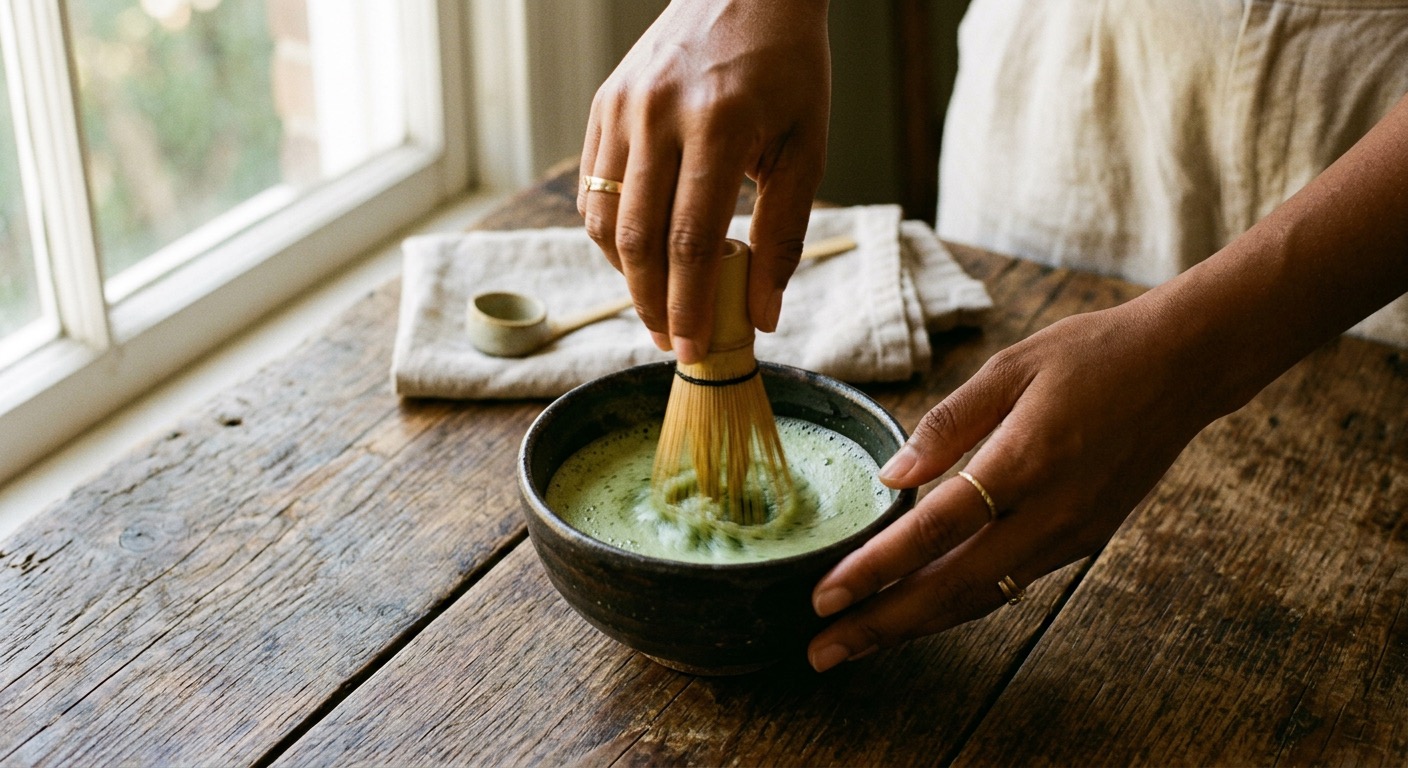
A bamboo chasen is not theater. It is the correct tool. The tines catch the powder, move air through the liquid, and build the fine foam that makes the bowl taste integrated instead of gritty. A spoon leaves lumps. A milk frother bullies the tea. Use the whisk.
Whisk in a fast W or M motion, not circles. About thirty seconds is enough. When the surface looks tight and foamy, with no islands of powder left behind, stop. That is the bowl.
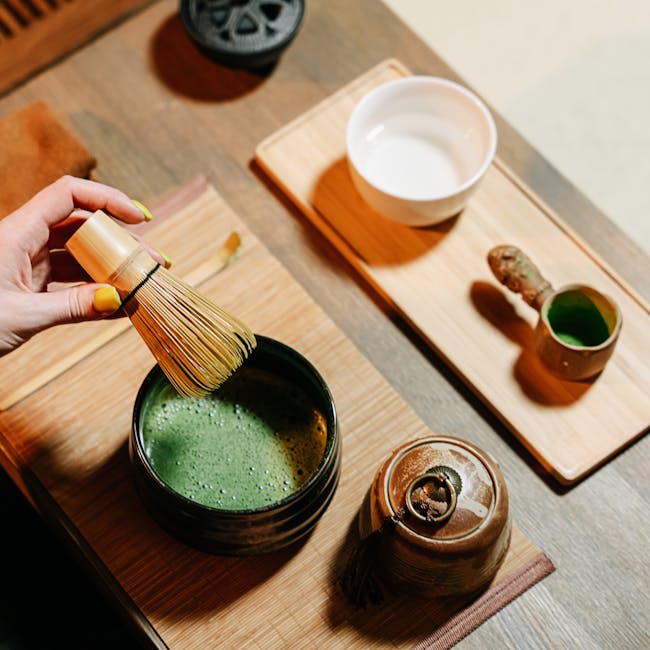
Uji-grown, first harvest, stone-ground. Clean sweetness before the umami lands. The tin that makes the whole method make sense.
Shop Ippodo →The whole point
The reason to learn this properly has less to do with purity than with pace. Matcha refuses to be made half-present. Too hot, too fast, too sloppy, and the bowl tells on you immediately. That is useful information first thing in the morning.
You give three minutes to one exact act. You start the day having already completed something with care. That does something to a person. It steadies the room.
The Japanese phrase ichi-go ichi-e, one time, one meeting, belongs here. This bowl only happens once. This morning only happens once. The practice is just a way of noticing that while it is still true.
You do not need a full tea room. You need good powder, correct water, and the sense not to rush the part that makes the whole thing worth doing.