There is a kind of silence that only shows up before the day starts making claims. The kitchen is still half-night. The window is turning lighter by increments. Nothing has asked anything of you yet. That is when I want coffee.
Not machine coffee. Not a pod. Not something made while staring into a phone. A pour over. Three minutes, start to finish, where the only job is water meeting grounds in the right order.
I have owned the convenience versions. French press. Drip machine. Capsules. They were fine in the way a lot of modern conveniences are fine. They solved speed. They did not solve feeling.
Why pour over, specifically
Pour over works because it is small enough to keep. The ritual is brief. The result is excellent. And the process requires just enough attention that your brain has to arrive in your body before the cup is done.
The coffee itself is clean and articulate. You taste the bean instead of the machine. Acidity stays bright. Sweetness stays present. If you buy good coffee, pour over is one of the clearest ways to hear what it has to say.
But the bigger reason is simpler. It is one finished thing before eight in the morning. That matters more than people admit.
The ratio
Use a 1:16 ratio. One gram of coffee for every sixteen grams of water. If you do not own a scale yet, use about two level tablespoons of coffee for every six ounces of water and keep your method consistent until the scale arrives.
Grind medium-coarse, somewhere around raw sugar. Too fine and the cup goes bitter. Too coarse and it tastes thin. Those are your two main corrections, grind and water temperature. That is the whole troubleshooting chart.
Water should be just off boil, around 200 to 205°F. Boil it, wait thirty seconds, then pour. Close enough counts here.
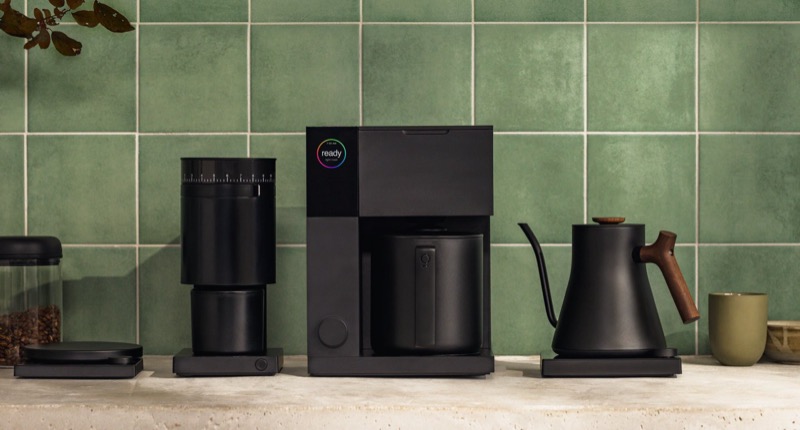
Precise temperature, slow controlled stream, genuinely good on a counter. The kettle that teaches your hand some patience.
Shop Fellow →The process, start to finish
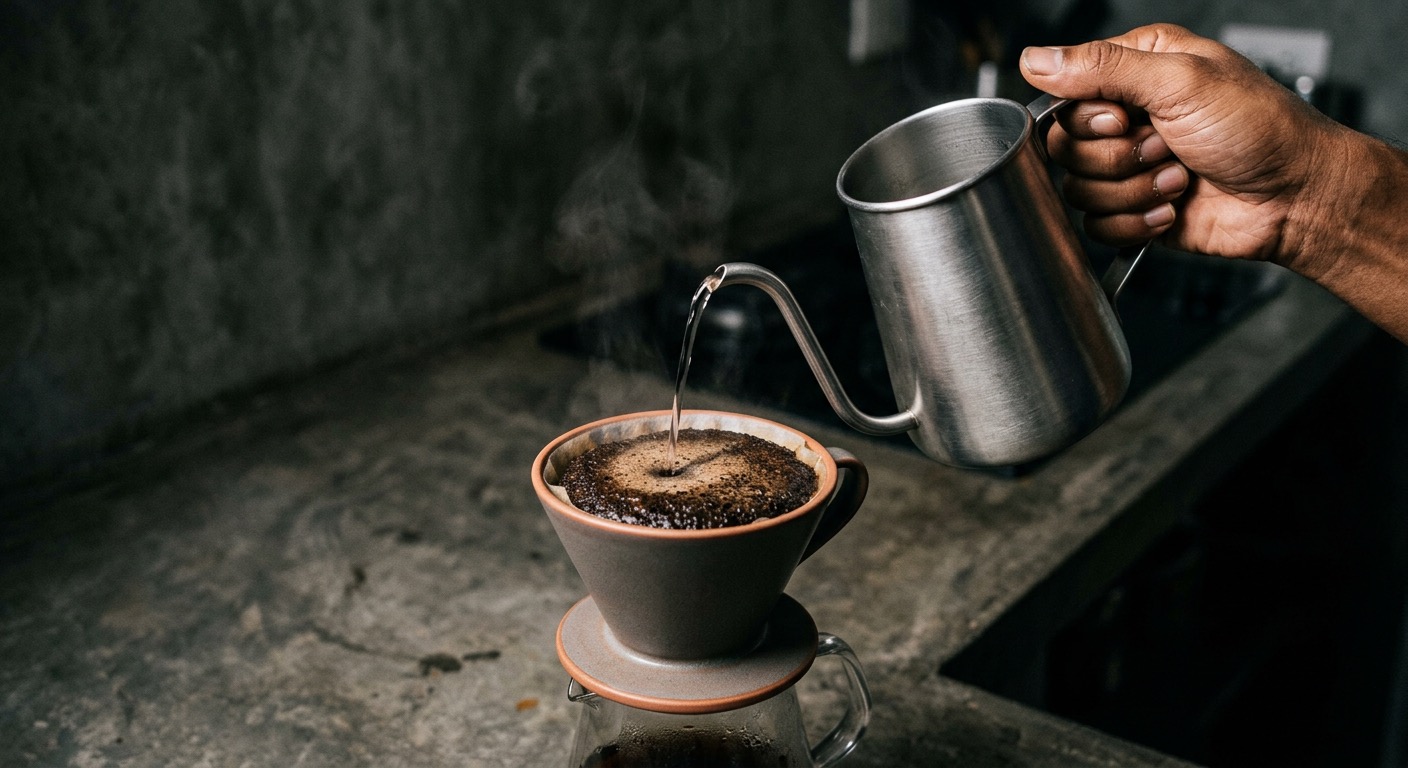
Set the dripper over your mug or carafe. Rinse the paper filter with hot water first, then dump that water out. This gets rid of the papery taste and warms the vessel so your coffee does not land cold.
Add the grounds. Pour in just enough water to saturate them, about twice the weight of the coffee, then wait thirty seconds. That first pause is the bloom. Fresh coffee releases gas. Stale coffee barely reacts. Useful information either way.
Then pour the remaining water in slow circles, center to edge and back in. Do not rush. Let the bed settle between pours if it needs to. Total brew time should land around three minutes. When it does, you have coffee, yes, but also proof that a morning does not need much to feel considered.

Heat-retaining, reliable, and forgiving while you learn. The kind of tool people buy once and keep using.
Shop Hario →The coffee matters more than the gear
A beautiful kettle cannot rescue stale beans. Buy from a roaster who cares about freshness and sourcing. Good beans make the whole practice feel justified.
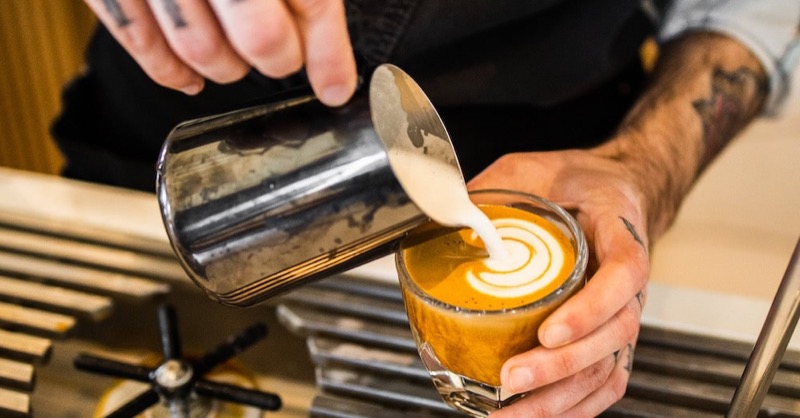
Fresh, carefully sourced, and roasted with enough precision that your three minutes actually pay off in the cup.
Shop Onyx →I have made this coffee in apartments, borrowed kitchens, hotel rooms with decent counters, and houses where everyone else was still asleep. The setting changes. The sequence does not.
That is part of its usefulness. Some habits are not there to impress you. They are there to return you to yourself before the world starts freelancing with your attention.
Evelyn