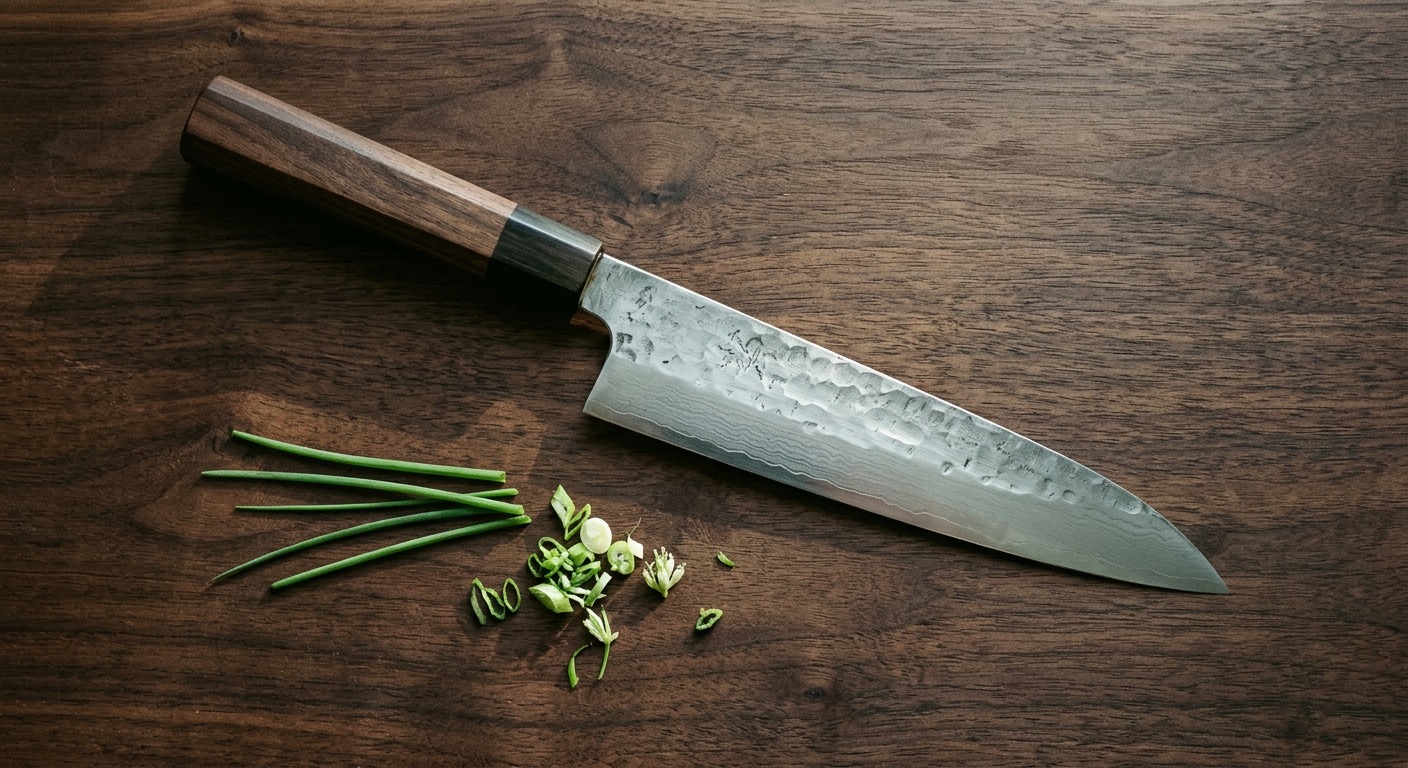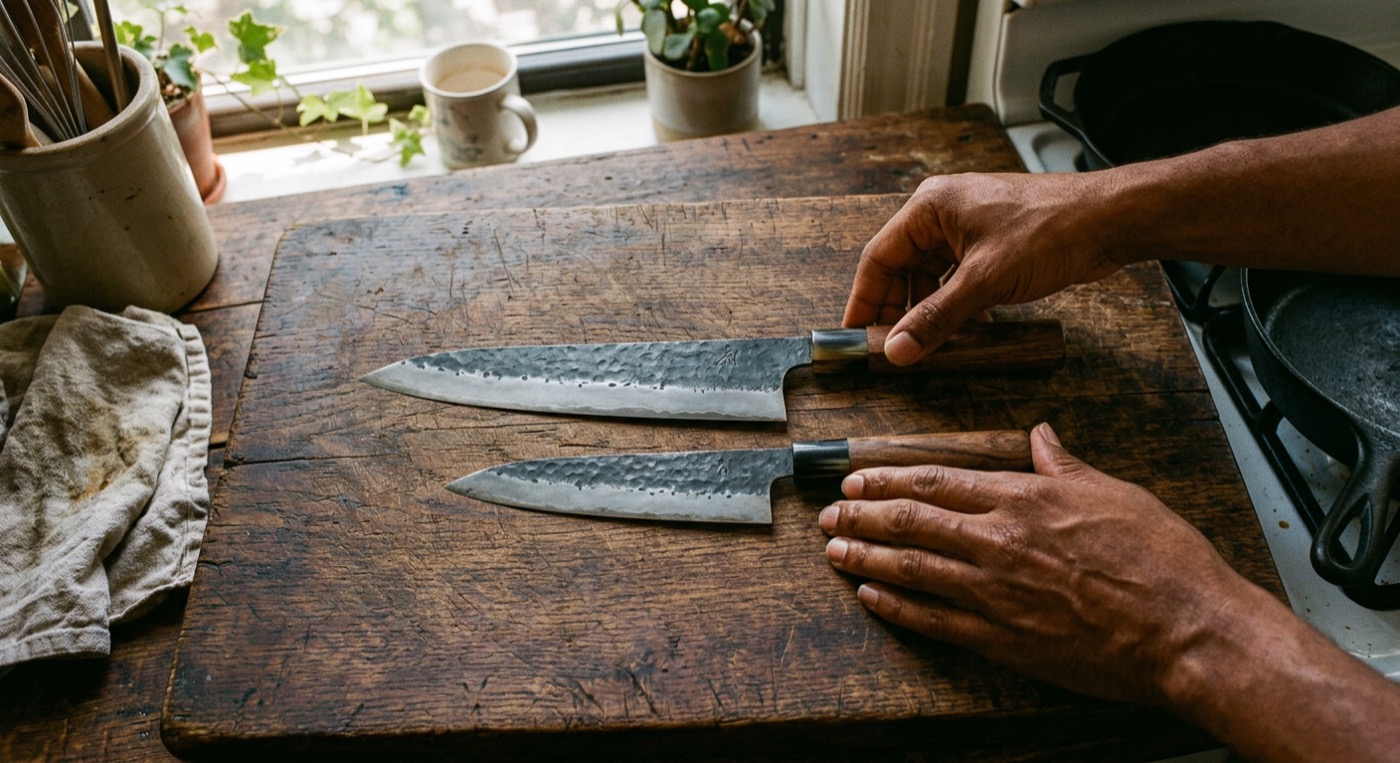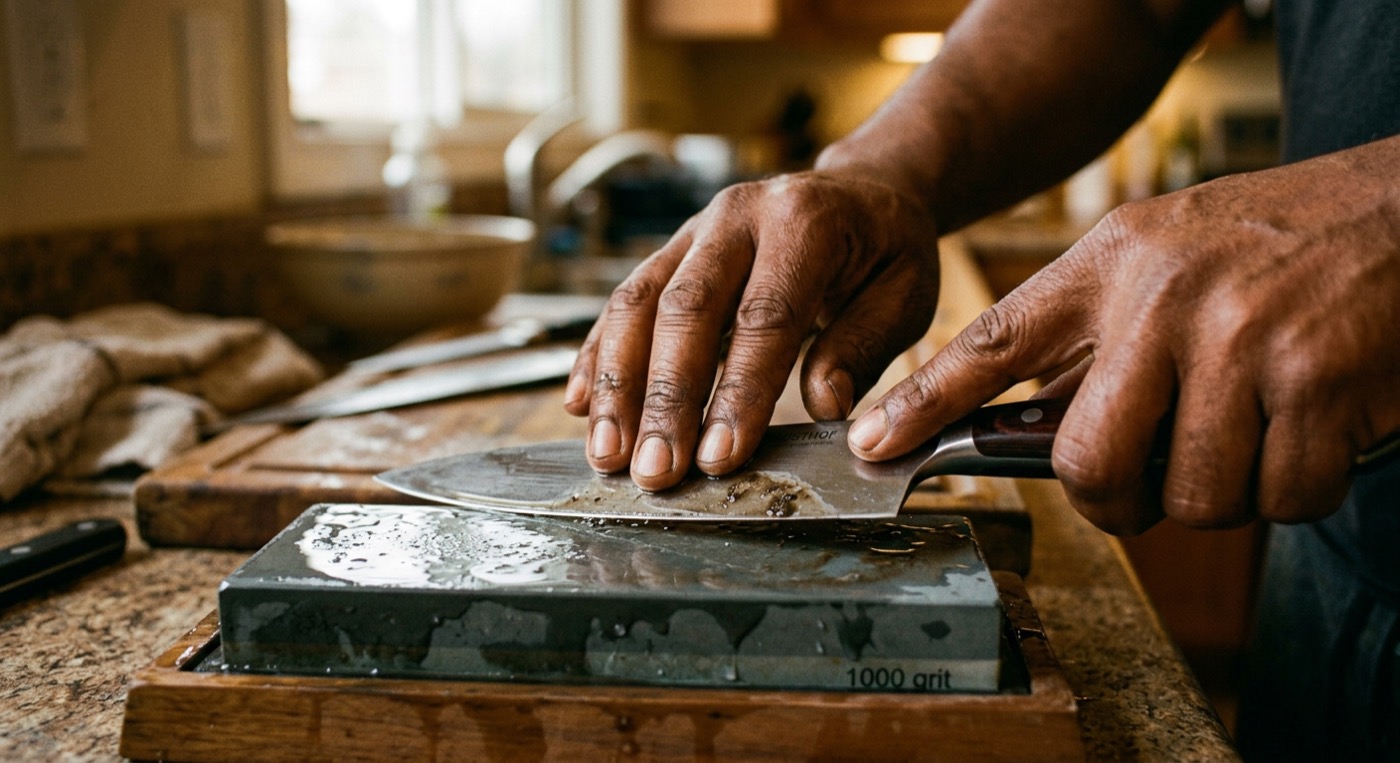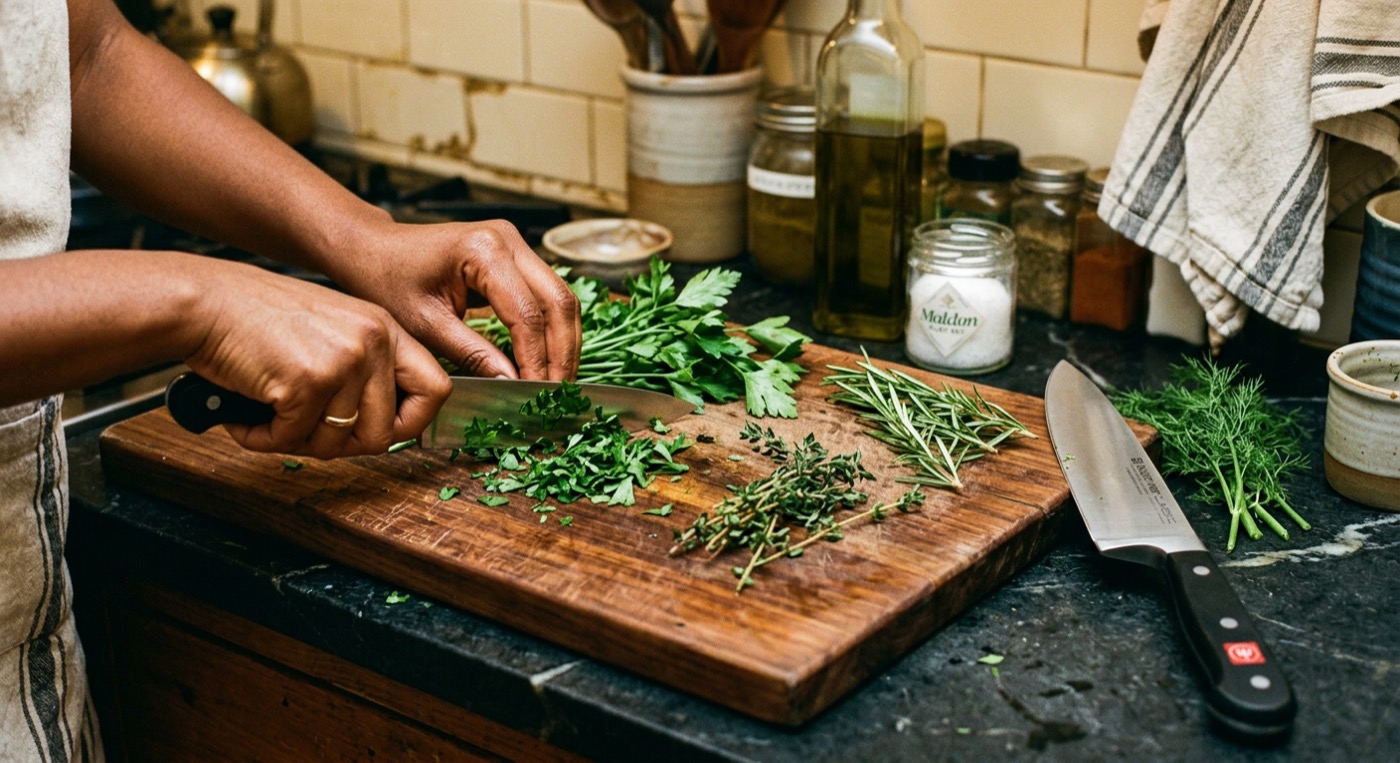
People will spend real money on a Japanese knife and then set it down on bamboo like nothing matters. The board is not an accessory. It is the surface your edge meets every single time.
Japanese knives run harder than German ones, often around 60 to 67 HRC. That hardness is why they feel so exact. It is also why they chip when the board is too hard. The rule is simple: the board should yield before the edge does.
What to avoid
Glass boards are for looking at, not cutting on. They sanitize easily and punish every stroke. The edge meets glass, and the edge loses.
Ceramic has the same problem. Pretty if you want it to sit there. Rough on a fine blade if you actually use it.
Bamboo is the one people get fooled by. It gets sold as eco-friendly and knife-friendly, and neither claim holds up especially well. The adhesives matter, the fibers are hard, and the surface is more abrasive than maple. Your knife can tell the difference even if the packaging will not.
Hinoki: the Japanese answer
Hinoki, Japanese cypress, is the classic answer for a reason. It is soft enough to give slightly under the blade, which means the edge takes less abuse cut after cut. That softness is not weakness. It is exactly the point.
It also smells good, faintly cedar-like, clean without trying too hard. Not gonna lie, that little burst of hinoki when you start prep makes the whole kitchen feel better.
Care is straightforward. Wash by hand. Dry it standing up. Oil it now and then with food-safe mineral oil. Same rules as any wood board worth keeping.
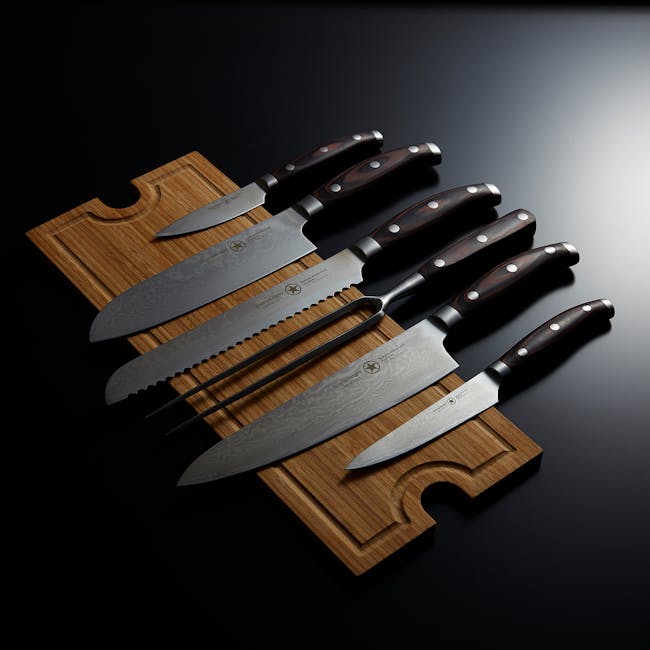
Japanese cypress. Softer than maple, easier on your edge, and quietly beautiful on the counter. The traditional choice because it still works.
Find on Amazon →Boos Block: if you want something to last decades
John Boos has been making boards in Effingham, Illinois since 1887, and you can feel that history in the weight of one. Maple edge-grain is durable enough for daily use, but still gentler on a Japanese edge than bamboo, glass, or anything foolish.
The useful distinction is edge grain versus end grain. End grain is kinder to the blade because the edge slips between the fibers instead of skating across them. It also asks more of you in maintenance and oiling, so choose based on how much fuss you actually want.
For most home cooks, the edge-grain Maple Board in 18x12 or 20x15 is enough board for a real prep session without swallowing the whole counter. Treat it well and it will be around longer than half your cookware.
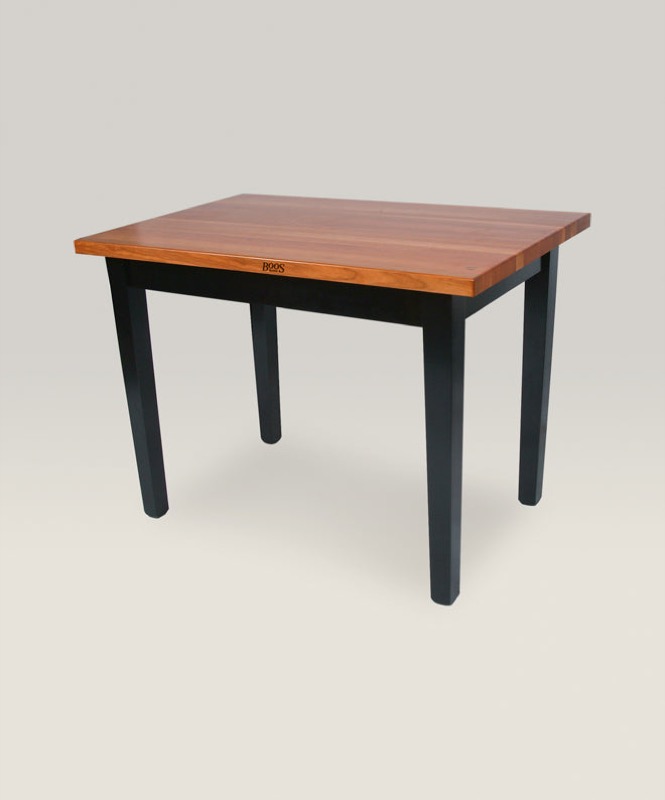
Made in Effingham since 1887. Hard maple, serious weight, built for daily work. The board you buy once and keep.
View on Amazon →Plastic when it matters
HDPE plastic has a real place in a kitchen. It is non-porous, dishwasher-safe, and easy to sanitize, which is exactly what you want for raw chicken, fish, and meat. Use the pleasant board for vegetables. Use the practical board for proteins.
Just buy an actual HDPE board, not those flimsy cutting sheets that curl at the corners. A proper board has enough thickness to stay put and enough give to avoid wrecking your edge.
The setup that works
One hinoki or wood board for produce, bread, and cooked food. One HDPE board for raw proteins. That is the whole system. You do not need a rainbow of plastic.
Keep the wood oiled. Let it dry upright. The knife and the board teach each other how you cook. My grandmother would call this common sense, and she would be right.