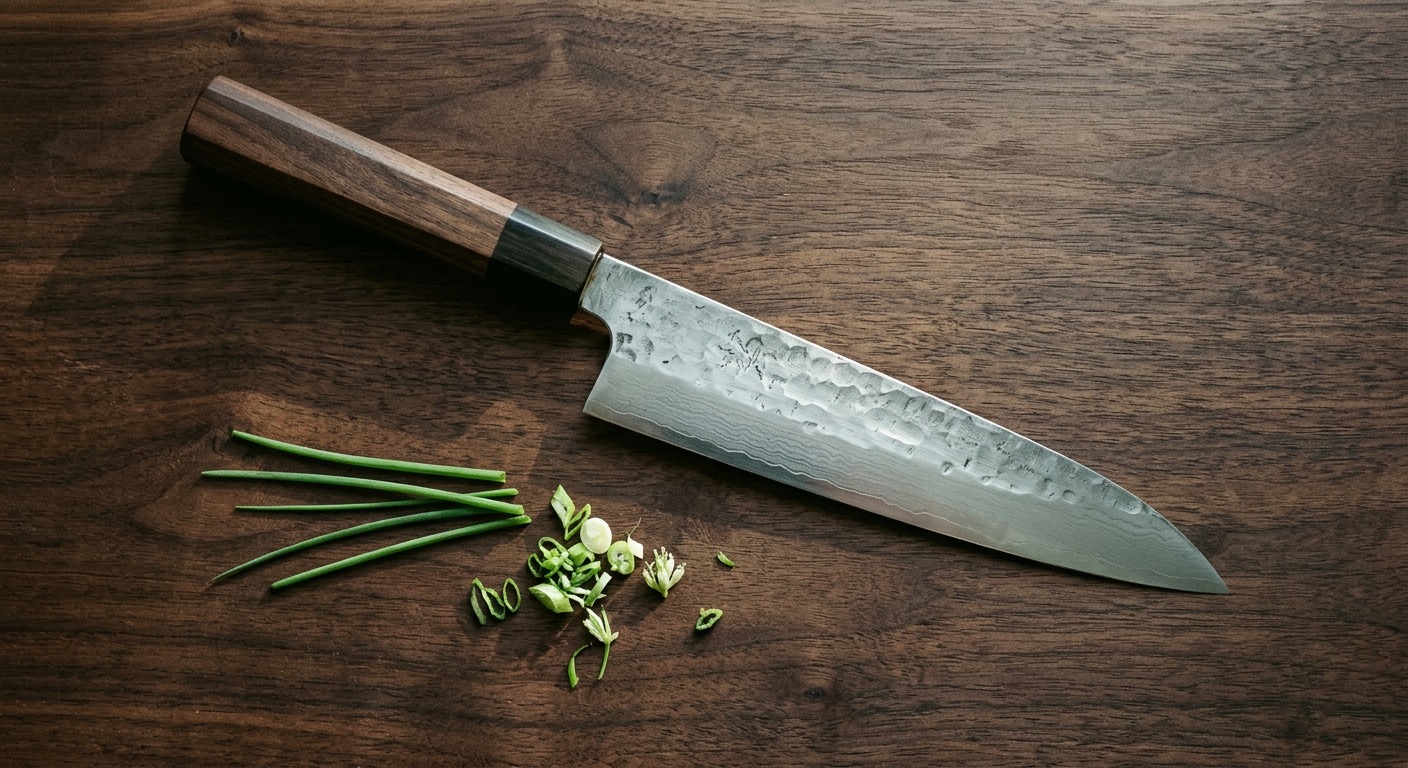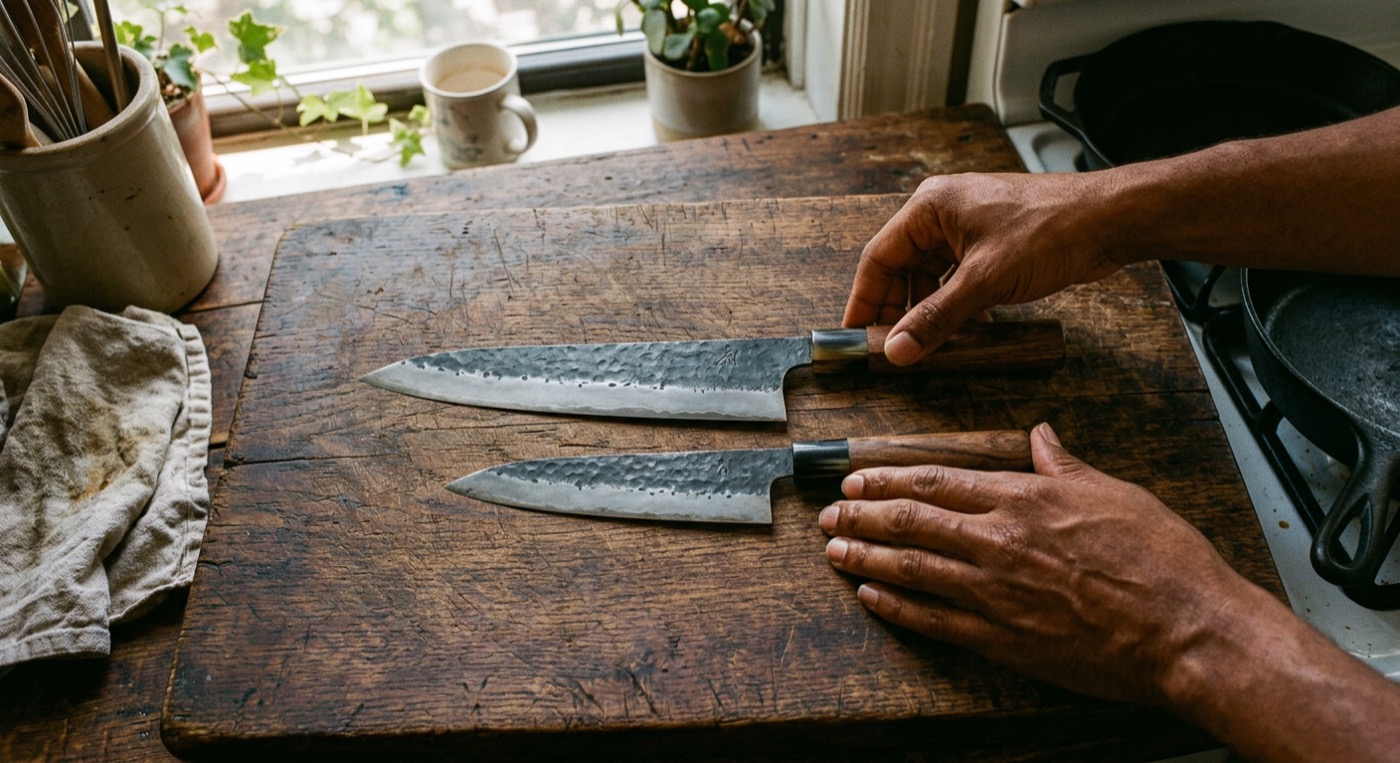
This debate gets overcomplicated fast. Forums make it sound like you are choosing a belief system. You are not. You are choosing a shape that suits the way you cut.
Both knives are excellent. Both outperform most Western starter knives. The real question is what feels natural in your hand and matches the food you actually cook.
The gyuto: Japan's answer to the Western chef's knife
Gyuto literally means beef sword, which is dramatic, but the knife itself is practical. The blade runs longer, usually 8 to 10 inches, with a pointed tip and a gentle curve that makes rocking cuts feel familiar to anyone raised on a chef's knife.
That length makes the gyuto the easier all-rounder. It slices proteins cleanly, handles vegetables well, and gives you more tip for detail work. If you are moving from German knives into Japanese steel, this is the smoothest transition.
The Global G-2 became a benchmark because it feels precise the second you pick it up. Cromova 18 stainless steel holds an edge well, and the hollow sand-filled handle shifts the balance into a very controlled place. Some people love it immediately. Some need a week. Both reactions make sense.
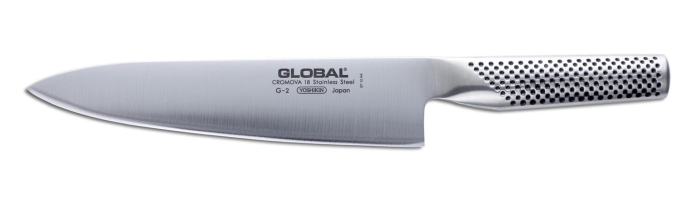
Cromova 18 stainless steel. Hollow sand-filled handle. Clean, balanced, and still one of the smartest gyutos to buy.
View on Amazon →The santoku: three virtues, one blade
Santoku means three virtues, meat, fish, and vegetables, which tells you everything about its ambition. The blade is shorter, usually 6 to 7 inches, with a flatter edge and a sheep's foot tip that favors push-cuts and pull-cuts over rocking.
That flat edge makes vegetable work especially satisfying. Herbs, onions, carrots, cabbage, the whole blade meets the board in a clean line. It is also lighter and easier to control for cooks with smaller hands or smaller prep spaces.
Many santokus include kullens, those shallow dimples along the blade face. They reduce surface contact so slices release more cleanly. Functional, not decorative.
Where each knife falls short
The gyuto can feel like too much knife for delicate vegetable work if your control is not there yet. The extra length is useful until it becomes slightly clumsy. And if you cook mostly in a Japanese push-cut style, the curve can work against you.
The santoku gives up reach and tip precision. Large proteins, long roasts, and rocking motions are not where it shines. If you mince a lot of herbs or break down whole chickens often, you will feel the limit.
The Shun Classic
Shun makes both profiles, which is useful because it lets you compare shapes inside the same design language. VG-MAX steel at the core, 68 layers of Damascus cladding outside, and a D-shaped pakkawood handle that feels as good as it looks. It is sharp out of the box and unapologetically pretty.
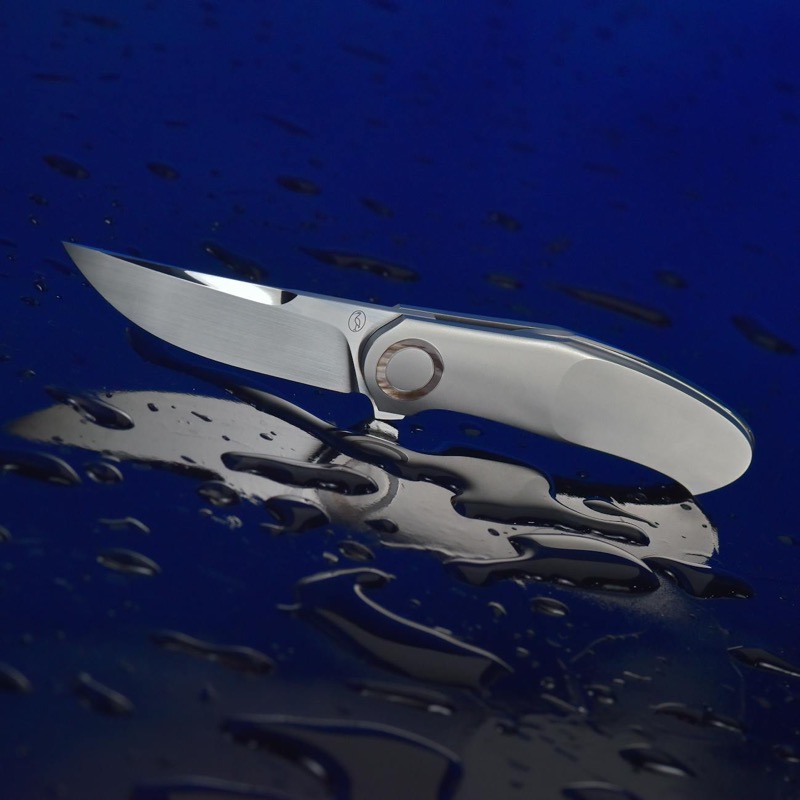
VG-MAX core, Damascus cladding, pakkawood handle. Beautiful, sharp, and a good way to feel the shape difference for yourself.
View at Kai USA →The MAC MTH-80: the answer for most people
If you want the honest shortcut, buy the MAC MTH-80 and stop turning this into a personality test. It is gyuto-adjacent at 8.5 inches, thin behind the edge, easy to maintain, and balanced in a way that makes good technique feel easier.
It is not the most romantic knife in the world. It does not come with hand-forged mystique. What it does is cut beautifully, day after day, at a price that still feels sane. My son thinks this is unhinged. He is twelve and wrong about this.
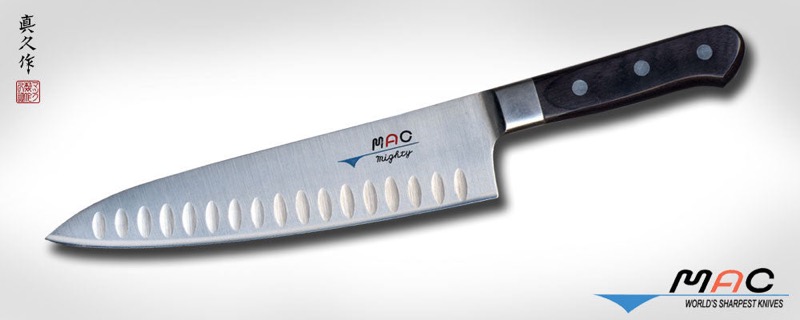
Thin blade, hollow edge, Western handle. The knife professionals buy with their own money for a reason.
View on Amazon →The actual answer
If you rock-cut, buy a gyuto. If you push-cut, cook mostly vegetables and fish, or prefer a shorter blade, try a santoku. If you do not know yet, the MAC is the safest place to start.
The shape matters less than time in hand. One knife used every day will teach you more than three knives rotated for sport.
My grandmother used what she had. Use yours until it becomes part of your hand.